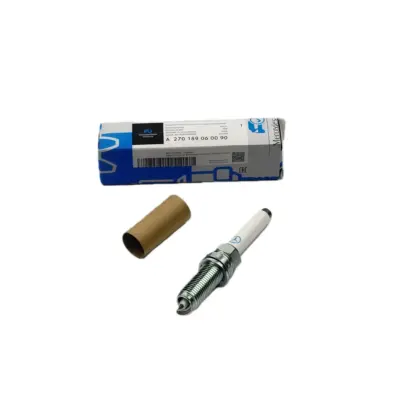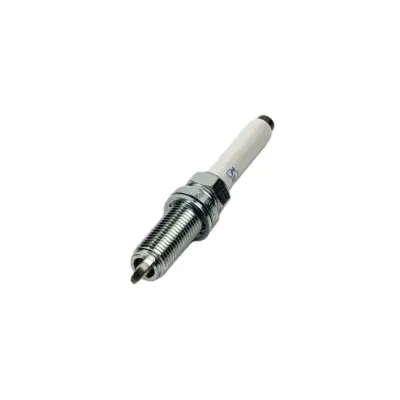
What Is the Primary Function of a Spark Plug?
A spark plug ignites the air–fuel mixture in a gasoline engine by delivering a controlled electrical spark. Its design directly affects combustion stability, engine efficiency, and emission control.
For bulk buyers, understanding this role is essential because spark plug specifications are closely tied to engine design, ignition systems, and operating conditions.
How Are Spark Plugs Classified by Electrode Material?
Spark plugs are commonly differentiated by the materials used for their center and ground electrodes. Material choice influences durability, heat resistance, and ignition consistency.
Common Electrode Material Types
- Copper (Nickel Alloy): Traditional design with good conductivity, typically used in older or basic engine applications.
- Platinum: Offers improved wear resistance and longer service intervals under stable operating conditions.
- Iridium: Designed for high-temperature tolerance and precise ignition, widely used in modern engines.
What Is the Difference Between Resistor and Non-Resistor Spark Plugs?
The key difference lies in electromagnetic interference suppression. Resistor spark plugs include an internal resistor to reduce electrical noise.
Most modern vehicles require resistor-type spark plugs to protect electronic control units and onboard sensors.
How Does Heat Range Affect Spark Plug Selection?
Heat range defines how efficiently a spark plug dissipates heat from the combustion chamber. It is not a measure of spark strength but of thermal behavior.
An incorrect heat range can cause fouling or pre-ignition, making it a critical parameter in OE-matched sourcing.
Hot PlugRetains more heat; suitable for lower-temperature or light-duty applications.
Cold PlugDissipates heat quickly; used in high-performance or high-compression engines.
Why Does Spark Plug Design Matter for Modern Engines?
Design features influence ignition efficiency and combustion consistency. As engines evolve, spark plug geometry becomes increasingly application-specific.
Design Variations You May Encounter
- Projected vs. non-projected insulators
- Single vs. multi-ground electrodes
- Fine-wire electrode configurations
How Should OE Numbers Guide Spark Plug Procurement?
OE numbers are the most reliable reference for ensuring correct fitment. They link the spark plug directly to engine specifications defined by the manufacturer.
For bulk buyers, OE-based sourcing minimizes compatibility risks across different markets and vehicle variants.
For bulk buyers, you may also explore our Spark Plug Wholesale category to review OEM and aftermarket options.
What Are Common Mistakes in Wholesale Spark Plug Sourcing?
Most sourcing errors stem from overgeneralization. Assuming interchangeability across brands or engine families often leads to misapplication.
- Ignoring heat range differences
- Overlooking resistor requirements
- Relying on visual similarity instead of OE data
How We Verify Fitment Before Bulk Supply
Fitment verification is treated as a technical process, not an assumption. Each step is designed to reduce downstream risk.
- OE number or VIN confirmation
- Cross-reference validation across catalogs
- Application and specification matching
- Sample or photo confirmation when required
For a deeper understanding of sourcing considerations, refer to our Spark Plug Buying Guide.
Different Types of Spark Plugs Explained – FAQs
Can one spark plug type fit multiple engine models?
In some cases yes, but only when OE specifications match exactly. Relying on visual similarity alone increases the risk of misfitment.
Why is heat range verification critical in bulk orders?
Incorrect heat range can cause fouling or pre-ignition, leading to performance issues and higher return rates.
Are iridium spark plugs always interchangeable with platinum ones?
No. Although both are precious metal designs, electrode geometry and thermal behavior can differ significantly.
Should aftermarket spark plugs always follow OE numbers?
Yes. OE numbers remain the primary reference even when sourcing aftermarket alternatives.
Understanding the different types of spark plugs is essential for accurate sourcing and long-term inventory stability. By evaluating material, heat range, design, and OE alignment together, procurement teams can reduce operational risk and ensure consistent engine performance across applications.