Brake Pads Guides
Brake Pad Selection for Performance and Heavy-Duty Applications
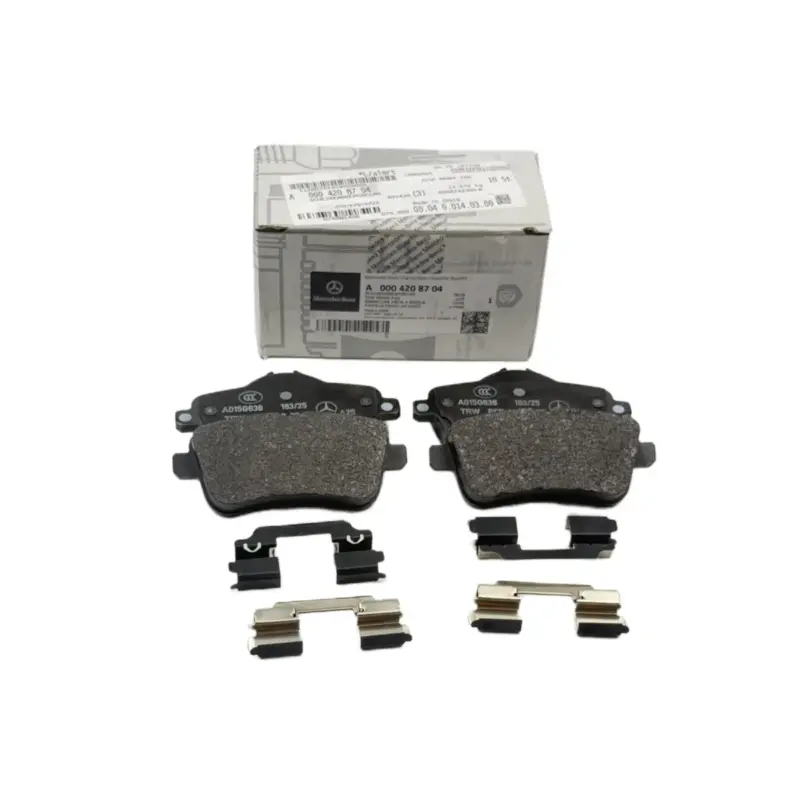
Performance and heavy-duty applications impose extreme braking stress. Vehicles may operate under high speeds, aggressive deceleration, or sustained load conditions. For wholesale distributors and B2B procurement teams, selecting brake pads for performance-oriented environments requires careful evaluation of thermal stability, friction consistency, and rotor compatibility.
This guide outlines the core technical considerations for sourcing brake pads intended for performance vehicles and heavy-duty applications.
How we verify fitment (Before placing a bulk order)
1OE / VIN collection — confirm OE number, vehicle identification, model year, and target market specification.
2Cross-reference validation— verify OEM catalog data and aftermarket interchange to identify supersessions and compatible alternatives.
3Application & specification check— validate key application parameters and technical specifications relevant to the product category.
4Sample or photo confirmation — pre-shipment sample or photo confirmation to minimize fitment and return risks.
Understanding Performance Braking Demands
Performance vehicles generate higher kinetic energy due to increased speed and braking intensity. Pads must maintain consistent friction at elevated temperatures and resist fade during repeated aggressive stops.
Performance-oriented requirements
- High thermal tolerance
- Stable friction coefficient under extreme heat
- Minimal glazing under aggressive braking
- Consistent pedal feel across temperature range
Buyers can review high-performance application families in Brake Pads Wholesale to evaluate compound segmentation across performance platforms.
Technical Module 1: Heat Dissipation and Rotor Interaction
Under heavy-duty braking, rotor temperature rises significantly. Pads must interact with rotor material without causing uneven hotspots or accelerated disc wear. Compound hardness and transfer layer formation play a key role in system stability.
- Resistance to thermal cracking
- Stable friction transfer layer formation
- Balanced rotor wear characteristics
Technical Module 2: Structural Integrity and High-Pressure Stability
Performance applications often involve higher hydraulic pressure. Pad backing plate strength and bonding integrity must withstand increased mechanical load without deformation or separation.
| Application Type | Primary Risk | Procurement Focus |
|---|---|---|
| Performance car | Brake fade under aggressive use | High-temperature friction stability |
| Heavy-duty commercial | Accelerated wear | Durable compound structure |
| Mountain terrain | Sustained heat load | Thermal resilience |
A structured evaluation workflow for high-stress applications is also supported by the Brake Pads Buying Guide.
How We Verify Fitment Before Bulk Supply
- OE number and brake package confirmation
- Rotor compatibility and ventilation assessment
- Axle-specific compound verification
- Thermal and load profile alignment
- Sample or image validation before shipment
For environment-driven compound strategy, see Brake Pad Selection by Driving Conditions and Use Cases to compare heavy-duty and urban optimization logic.
Brake Pad Selection for Performance and Heavy-Duty Applications – FAQs
Why do performance vehicles require different brake pad compounds?
Higher speeds and aggressive braking generate extreme heat, requiring compounds that maintain stable friction without fade.
Are heavy-duty compounds suitable for everyday passenger cars?
They may increase durability but can create higher noise or rotor wear if not matched to daily driving conditions.
What details should wholesalers confirm before supplying performance pads?
OE numbers, brake package specifications, rotor design, axle position, and intended driving environment should be validated.
Brake pad selection for performance and heavy-duty applications must prioritize thermal resilience, structural integrity, and system-level compatibility. With systematic verification, wholesalers can support safe and stable braking performance under high-stress conditions.
Related guides

Before you source / Before you order
Confirm OE number or VIN to avoid fitment errors
Verify heat range and reach to prevent misfire or engine damage
Choose electrode material based on service interval and cost
Confirm packaging requirements for export shipping
Tip: send quantity, destination country, and packing requirement for faster quoting.
Fitment confirmation
Share the OE number, VIN, or engine details, and we’ll help confirm compatibility before ordering.
Request fitment check →
