Brake Pads Guides
Brake Pad Selection Guide for OEM and Aftermarket Supply
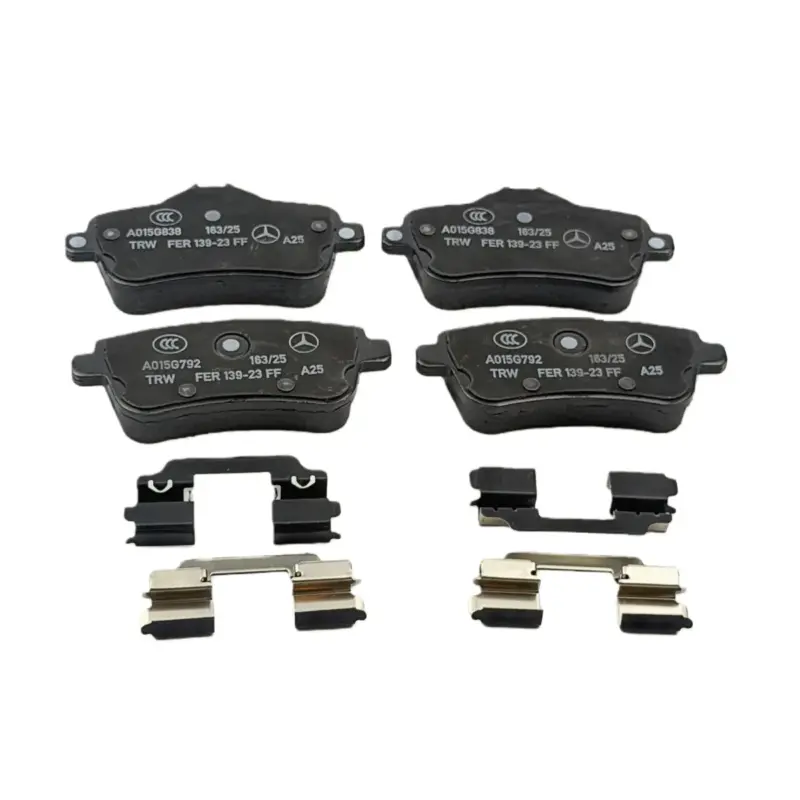
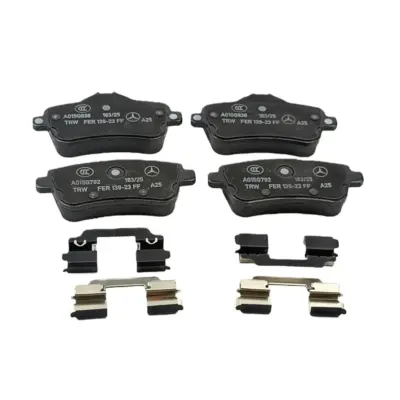
Selecting brake pads for OEM and aftermarket supply requires a structured evaluation approach.
Although both channels distribute similar components, their engineering expectations and tolerance levels differ.
Understanding these differences is essential for distributors managing mixed supply programs.
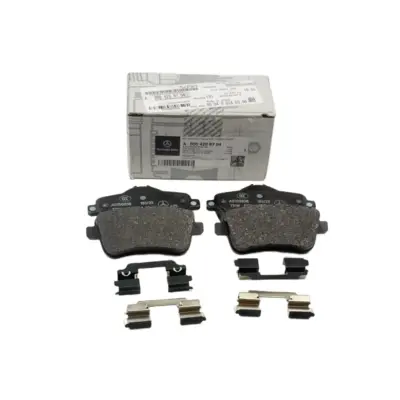
How we verify fitment (Before placing a bulk order)
1OE / VIN collection — confirm OE number, vehicle identification, model year, and target market specification.
2Cross-reference validation— verify OEM catalog data and aftermarket interchange to identify supersessions and compatible alternatives.
3Application & specification check— validate key application parameters and technical specifications relevant to the product category.
4Sample or photo confirmation — pre-shipment sample or photo confirmation to minimize fitment and return risks.
OEM vs Aftermarket: Structural Differences
OEM brake pads are engineered for specific vehicle platforms and must meet tightly controlled performance benchmarks.
Aftermarket brake pads, by contrast, often prioritize broader application coverage and flexibility across multiple platforms.
Core distinctions
- OEM pads emphasize exact dimensional tolerance and NVH control
- Aftermarket pads focus on wider compatibility
- Service life expectations may vary depending on region and driving conditions
Material Strategy Across Supply Channels
Material formulation determines braking stability, dust levels, and wear patterns.
OEM supply often requires stable friction curves under defined operating parameters.
Aftermarket supply may demand broader thermal tolerance across mixed usage scenarios.
Common material configurations
- Ceramic and low-metallic formulas for OEM-oriented programs
- Semi-metallic options for high-heat aftermarket use
- Regionally adjusted compounds for climate-specific markets
Distributors comparing different material structures and product ranges can review application coverage and SKU segmentation through brake pads wholesale to align selection with target vehicle platforms.
Fitment Accuracy and OE Matching
Accurate OE number validation is fundamental in both OEM and aftermarket supply.
OEM channels require exact specification replication, while aftermarket channels must balance flexibility with reliable compatibility.
Fitment validation checklist
- OE number confirmation
- Brake system and caliper type verification
- Axle position and rotor compatibility
- Production year and vehicle platform alignment
For a structured framework on how to evaluate brake pad specifications before committing to volume purchasing, the brake pads buying guide provides additional technical comparison criteria.
Common Risks in Mixed OEM and Aftermarket Supply
When distributors manage both channels simultaneously, overlapping SKUs or unclear classification can create internal confusion and customer-facing performance issues.
Clear documentation and specification separation are critical.
Risk control strategies
- Separate coding for OEM-focused and aftermarket lines
- Explicit labeling of brake system compatibility
- Batch traceability for quality control
How We Verify Fitment Before Bulk Supply
Before approving bulk brake pad shipments, we implement a structured validation workflow.
This minimizes application mismatch and protects downstream distributors.
- Official OE number confirmation
- Cross-reference checks across catalog databases
- Brake system and axle validation
- Sample or image confirmation when required
If your focus is specifically replacement-channel accuracy and warranty control, continue with Brake Pad Selection for OEM Replacement Programs to compare specification depth and QC requirements in replacement supply.
OEM and Aftermarket Brake Pad Selection – FAQs
Can OEM and aftermarket brake pads share the same reference number?
They may share reference numbers, but formulation and manufacturing tolerances can differ.
Independent technical verification is recommended.
What causes most cross-channel compatibility issues?
Material mismatch and incorrect brake system identification are the most common causes.
Brake pad selection across OEM and aftermarket supply demands careful differentiation.
By validating material structure, fitment accuracy, and channel logic, distributors can maintain consistent braking performance across global markets.
Related guides

Before you source / Before you order
Confirm OE number or VIN to avoid fitment errors
Verify heat range and reach to prevent misfire or engine damage
Choose electrode material based on service interval and cost
Confirm packaging requirements for export shipping
Tip: send quantity, destination country, and packing requirement for faster quoting.
Fitment confirmation
Share the OE number, VIN, or engine details, and we’ll help confirm compatibility before ordering.
Request fitment check →
