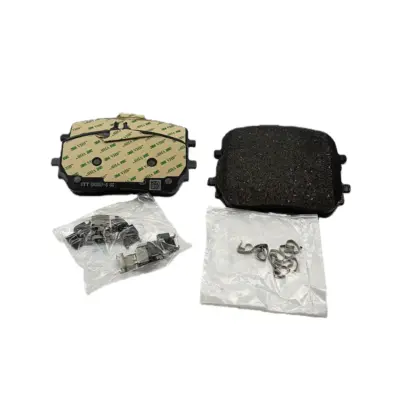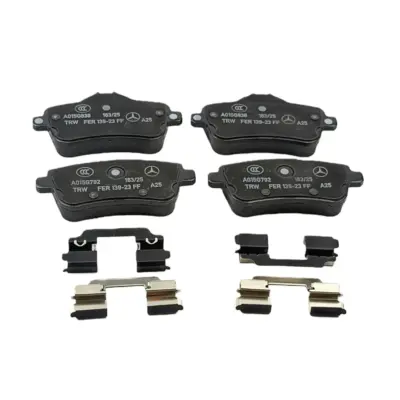
1. OEM Brake Pads vs Aftermarket: Quick Comparison
Some people believe that brake pads have a simple structure, just a patch and a friction layer, and that as consumables, they only need to stop the car. However, this is not the case. OEM brake pads and aftermarket brake pads differ significantly in materials, performance, compatibility, and safety. Below is a quick comparison between the two.
| Factor | OEM | Aftermarket |
|---|---|---|
| Material and Formula Differences | Noise and dust complaints | Comfort-focused compound |
| Braking Performance and Heat Fade | Sudden heat spike | Stable friction recovery |
| Compatibility and Fitment | Perfectly matches the original vehicle braking system | Mostly universal products, insufficient compatibility |
| Service Life and Wear | Mostly universal products, insufficient compatibility | High wear rate, short lifespan |
| Price and Warranty Impact | High | Low |
2. What Are OEM Brake Pads? What Are They Designed For?
OEM Brake Pads refer to Brake Pads from the original equipment supplier/manufacturer, where the supplier relationship and application can be verified. OEM brake pads are engineered to meet the vehicle manufacturer’s original performance targets. These targets usually prioritize predictable pedal feel, low noise, and balanced wear rather than maximum braking bite.
Typical OEM brake pad characteristics:
- Low noise and vibration under normal driving conditions
- Consistent braking feel matched to factory tuning
- Balanced dust generation and rotor wear
It’s worth noting that OEM parts and genuine parts are not entirely the same. Genuine parts are typically sold under the vehicle manufacturer’s brand, and are supplied through the manufacturer’s genuine parts channel. OEM parts are produced by manufacturers that supply components to the vehicle manufacturer or meet the original equipment specifications, but may be sold under the supplier’s own brand.
3. What Are Aftermarket Brake Pads? What Are They Designed For?
Aftermarket parts actually refer to accessories manufactured by manufacturers that are not authorized by the original equipment manufacturer (OEM). Aftermarket brake pads cover a wider range of use cases.
Some focus on cost efficiency, while others target higher friction, performance driving, or extended service life.
- Common aftermarket brake pad goals
- Broader application coverage across multiple models
- Performance-oriented compounds for higher temperature resistance
- Cost-optimized options for price-sensitive markets
4. OEM vs Aftermarket Brake Pads: Key Differences
OEM and aftermarket brake pads differ mainly in manufacturer, specifications, fitment, materials, consistency, and price. OEM brake pads are generally produced to the specifications of the vehicle manufacturer and are designed for a specific braking system, while aftermarket brake pads are produced by independent manufacturers and may offer a wider range of materials, performance characteristics, and price points.
In real driving conditions, the biggest differences appear in noise behavior, dust level, and rotor wear. These factors influence customer satisfaction more than raw braking force.
Key real-world differences:
- Noise sensitivity varies significantly by compound choice
- Dust levels affect wheel cleanliness and perception of quality
- Rotor wear rates influence long-term maintenance cost
For wholesale buyers, the key factors to compare include OE number compatibility, friction material, braking performance, noise and dust levels, service life, quality consistency, certification, warranty, and overall landed cost.
5. Are OEM Brake Pads Really Better?
Importantly, aftermarket does not automatically mean lower quality, and OEM does not automatically mean the best choice for every application—the right option depends on the vehicle, market, customer expectations, and purchasing requirements.
For brake pads, “Better” can mean quieter braking, longer life, lower cost, or stronger bite. So the right answer depends on driving style, vehicle type, and maintenance expectations.
Common buyer priorities:
- Low noise and smooth braking feel
- Reasonable service life and rotor protection
- Cost control without compromising safety
6. Advantages and Disadvantages: In what situations is it best to choose OEM/Aftermarket of brake pads?
OEM pads offer consistency and lower risk, but they are not always the best fit for every use case. Understanding their trade-offs helps buyers make informed decisions.
| Comparison items | OEM | Aftermarket |
|---|---|---|
| Advantages | Predictable comfort, reduced noise complaints, factory-matched feelNoise and dust complaints | Wider price range, performance options, broader coverage |
| Limitations | Higher cost, limited performance customization | Higher risk of mismatch if specifications are not verified |
OEM brake pads are usually better when comfort, predictability, and factory behavior are the main goals. They are designed to work seamlessly with the original brake system.
Situations where OEM pads make sense:
- Daily driving with an emphasis on comfort and quietness
- Vehicles with sensitive brake tuning
- Drivers who prefer factory-like performance
Aftermarket brake pads may be better when specific performance or budget goals are prioritized. They offer more flexibility in compound selection and price range.
Aftermarket brake pads provide flexibility, but that flexibility increases the importance of correct specification matching. The wrong aftermarket choice can create noise or wear issues.
Situations where aftermarket pads make sense:
- Performance or heavy-duty driving conditions
- Cost-sensitive replacement scenarios
- Drivers seeking specific characteristics such as low dust or higher bite
7. How to Select Correct Brake Pads?
Based on the comparison above, we can conclude that the main risk is not OEM vs aftermarket, but incorrect matching. A mismatched pad can cause noise, vibration, uneven wear, or reduced braking confidence.
Common risk factors:
- Ignoring brake system variations and axle position
- Choosing compound based on marketing rather than use case
- Overlooking hardware and shim compatibility
8.How We Help Buyers Choose The Right Brake Pads?
To reduce mistakes, we apply a verification workflow before confirming supply. This ensures the pad choice fits both the brake system and market expectations.
- OE number or application confirmation
- Brake package and caliper validation
- Compound suitability review
- Sample or visual confirmation when needed
9.Which Brake Pads Should Wholesalers Choose?
OEM brake pads and aftermarket brake pads are not “better or worse” in a simple way. The right choice depends on your target market, brake system requirements, and the trade-offs between noise, dust, rotor wear, and service life.
OEM-style pads are often the safer choice when your market prioritizes comfort and low noise, or when vehicles have sensitive brake system tuning. They also reduce decision complexity in high-volume, standard replacement channels.
Typical OEM-style sourcing scenarios:
- Markets that prioritize quiet braking and predictable feel
- Late-model vehicles where brake tuning is more sensitive
- Distribution channels focused on standard replacement behavior
Aftermarket brake pads can be the better choice when wholesalers need broader application coverage, specific performance needs, or cost positioning. The key is matching the pad type to the actual driving profile and customer expectations.
Typical aftermarket sourcing scenarios:
- Fleet use cases requiring high-temperature stability and durability
- Markets where cost efficiency is a primary buying factor
- Buyers who prefer tailored compounds (low dust, higher bite, etc.)
If you’d like to learn more about how aftermarket wholesalers choose brake pads, you can read our other article:Brake Pad Selection Guide for Aftermarket Supply Chains
Frequently Asked Questions and Answers
Can OEM and aftermarket brake pads share the same reference number?
They may share reference numbers, but formulation and manufacturing tolerances can differ. Independent technical verification is recommended.
Can aftermarket brake pads be just as safe as OEM?
Yes. Safety depends on correct specifications and proper installation,
not on whether the pad is OEM or aftermarket.
What causes most cross-channel compatibility issues?
Material mismatch and incorrect brake system identification are the most common causes.